The fourth FlowSurf venue worldwide is opening in Québec City, and it’s Canada’s first.
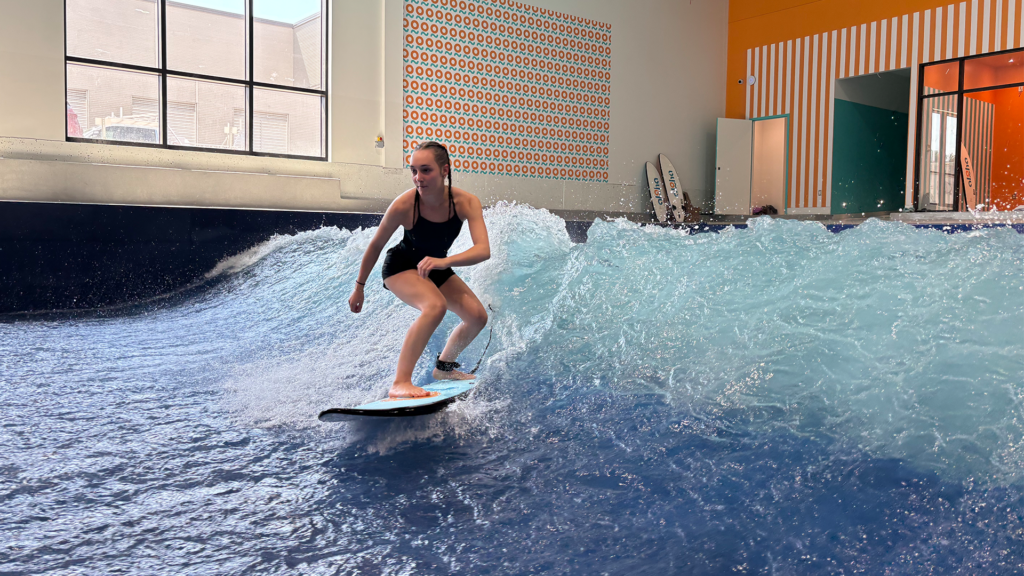
Québec City has spas. It has poutine joints on nearly every corner. What it hasn’t had, until now, is a wave. That’s about to change. Complex Aloha, a four-floor, 86,000-square-foot build on Boulevard Wilfrid-Hamel, is opening its doors this summer, and at the center of it sits Aloha Surf: the largest indoor wave in Canada and the country’s first FlowSurf installation.
Founded by brothers Laurent and Jean-François Paquin alongside partner Raphaël Provost, Aloha Surf started as an idea in 2024 and has grown into something considerably bigger than a wave pool. The wave is the anchor. Everything else, an entire building’s worth of it, was designed around keeping people there long after their session ends.
Four Venues and Just Getting Started
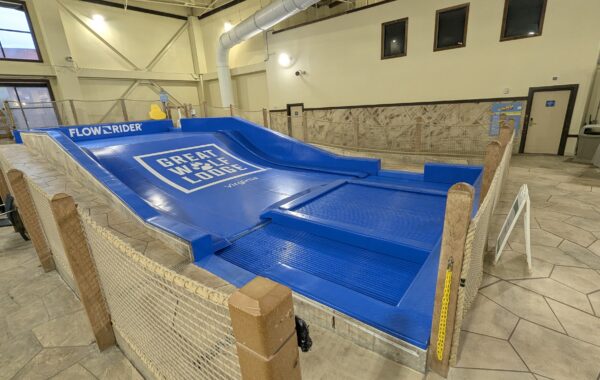
Aloha Surf joins a fast-growing family. FlowSurf, FlowRider’s deep-water wave technology, has already made its mark at Waco Surf in Texas, Surflux in Luxembourg, and ADRENA on the Red Sea, three completely different markets united by the same wave. Aloha Surf is the fourth stop, and the first north of the border. For a technology that’s spent the past year proving it can work in a desert resort, a converted European warehouse, and a Texas surf ranch, a Canadian debut is the natural next test: could FlowSurf headline a four-season, all-weather entertainment complex in a city that sees real winter? Québec City is about to find out.
A Wave Built for Everyone in the Room
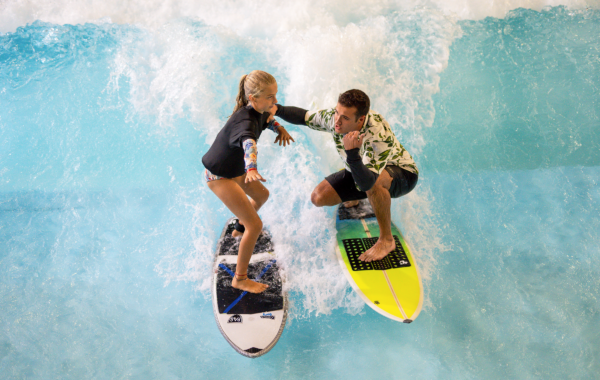
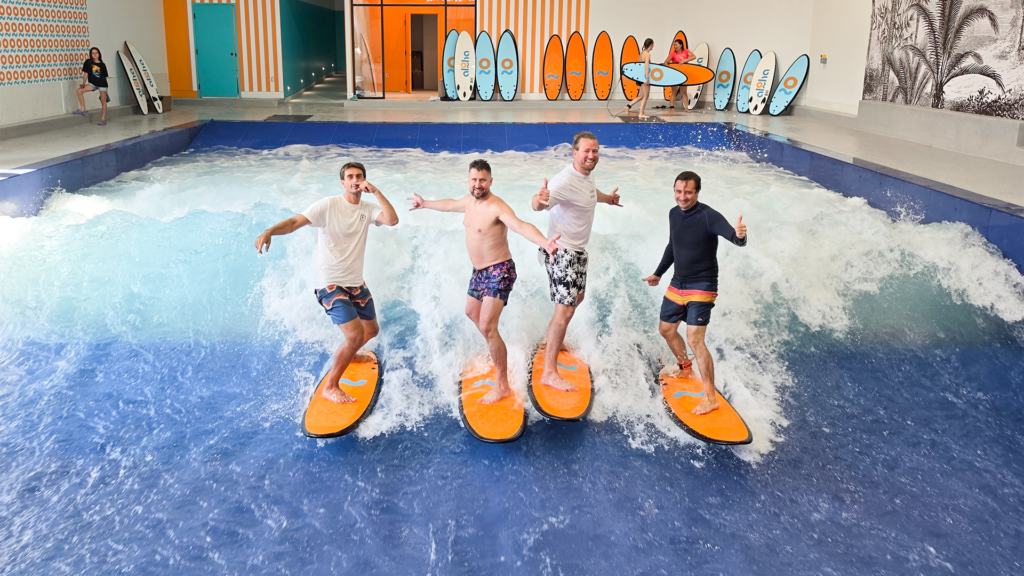
The wave itself runs 10 meters wide and adjusts up to 1.5 meters high, fully modulable so the depth and power can shift from a gentle roller for a first-timer to a steep, rippable face for someone who’s spent years on a shortboard. What that means in practice is that Aloha Surf is designed for riders both young and seasoned, no prior surfing or even swimming experience required. A one-hour session, including 15 minutes of instruction, with certified monitors on deck for every level.
Behind the scenes, the wave is powered by the same engineering partnership behind every FlowSurf install: FlowRider’s deep-water technology, built with the French hydraulic experts at Hydrostadium. It’s the kind of precision that lets the wave hold its shape session after session, all day, without asking operators to choose between performance and a manageable power bill. In fact, the FlowSurf product uses less than 61% less water and half the power as its deep-water wave competitors.
Everything Else Under One (Very Big) Roof
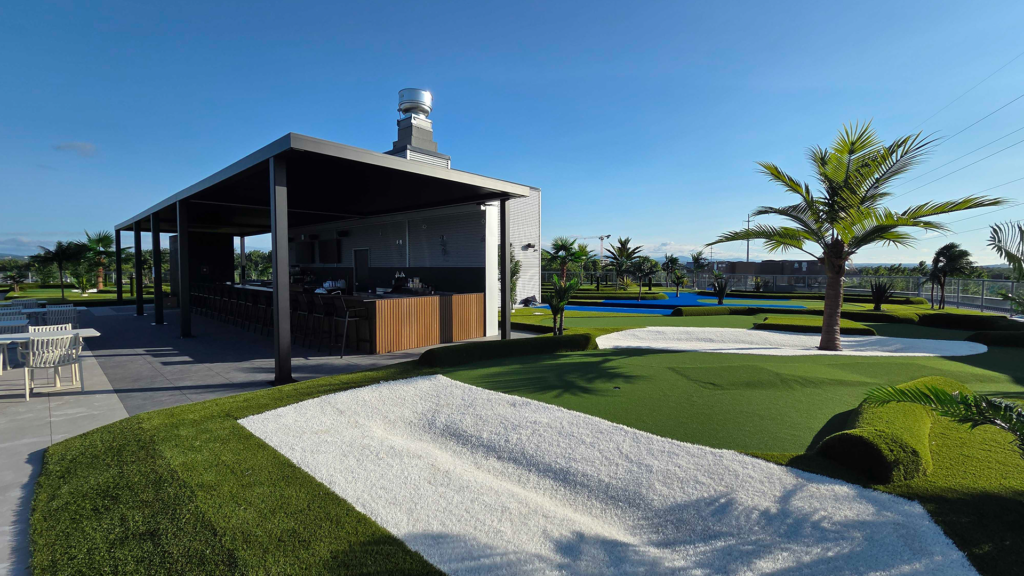
Here’s where Aloha Surf stops looking like a surf park and starts looking like a destination. The wave sits inside a building that also holds The Sunset, a Bali-inspired restaurant with a terrace overlooking the water, a full wellness center with spa, sauna, cold plunge, massage therapy, physiotherapy, and a health bar, and an entire floor built for the in-between moments: golf simulators, arcade games, a retro skating rink, and a rooftop mini-golf course, because apparently one attraction per building was never the plan. Sport Radical, a well-known Québec retailer, is opening a second location inside as Aloha Surf’s official shop, so riders can walk out the door with the gear to keep chasing the feeling elsewhere. Its colors are funky and bright, inviting the feeling of a nostalgic summer into the year-round building.
Growing a Wave Culture That Was Already Building
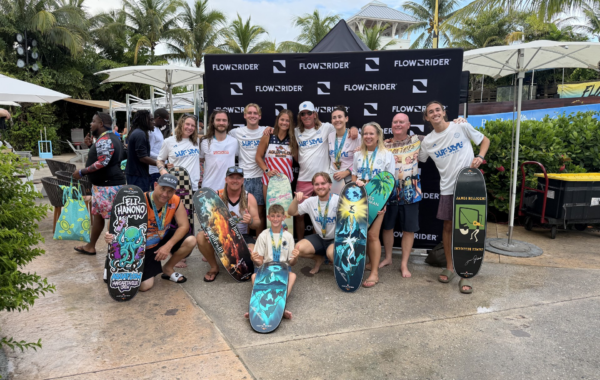
Québec’s surf community isn’t starting from zero. River surfers have been riding the standing waves on the St. Lawrence near Montréal for years, chasing a scene that grows every season regardless of what the calendar says about swim weather. Aloha Surf gives that community, and a lot of newcomers who’ve never stood on a board, a reason to show up twelve months a year, waves included regardless of what weather waits for them outside.