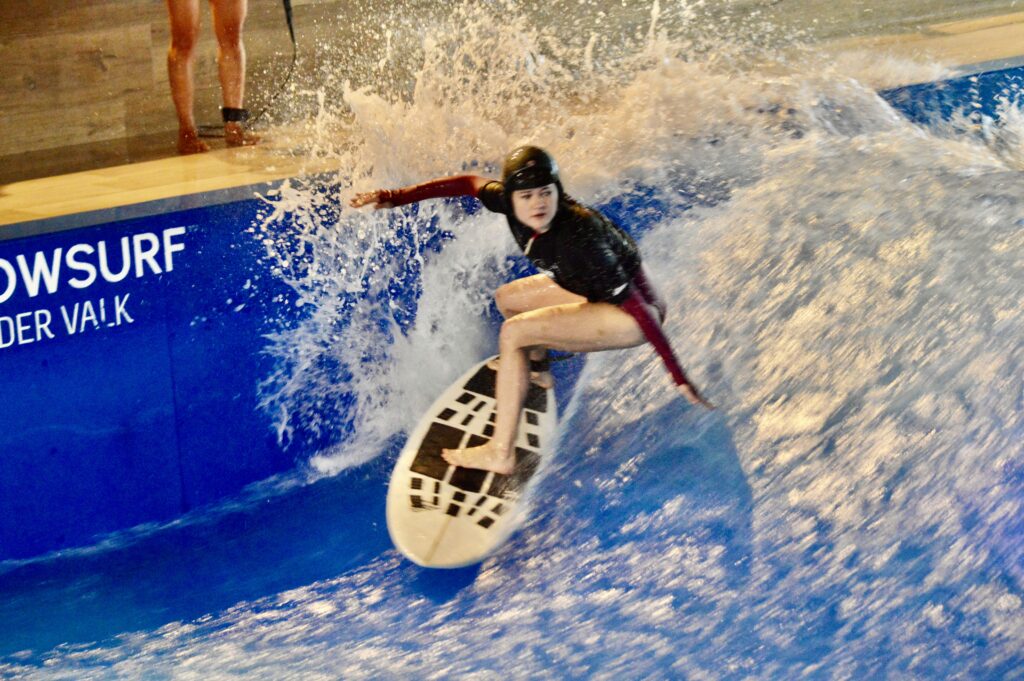
Surfing’s Olympic moment is building an audience. For hotels and resorts, engineered waves turn that audience into guests.
In July 2028, the best surfers in the world will paddle out at Lower Trestles, a cobblestone point break just south of San Clemente. It will be surfing’s third Olympic Games and the audience is already primed. On finals day at Paris 2024, 47.5 million Brazilians tuned in, a record free-to-air audience for broadcaster Globo.
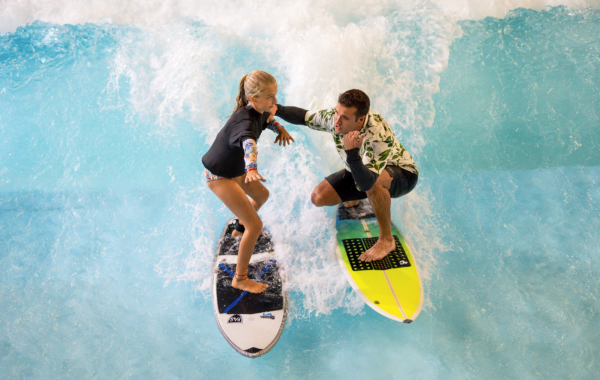
The ocean is still the main event and Trestles has earned its stage. Engineered waves play a different role. They give more people in more places an opportunity to start surfing and they give athletes somewhere to practice for the real thing. For hotels and resorts, they also bring a fast-growing sport onto the property, and with it, guests who stay longer and come back.
The Numbers Behind the Boom
The Olympic spotlight lands on a sport that was already growing. More than 4.2 million Americans surfed at least once in 2024, up 5.9% from the year before. Participation has climbed an average of 8% a year since 2019.
Most of that growth is casual. Hotel & Leisure Advisors puts casual surfers at about 69% of U.S. participants, and roughly a third of all U.S. surfers live where the ocean isn’t a practical option. Those are exactly the riders engineered waves serve. SIMA’s 2026 Surf Industry Growth Report ties the industry’s growth largely to expanded access to waves.
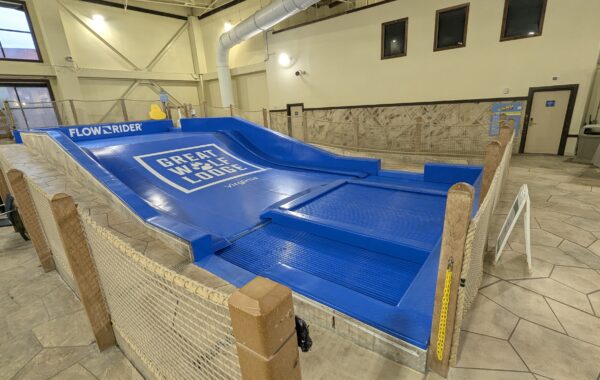
Builders are racing to keep up. WavePoolMag counted 34 operational wave pools worldwide at the start of 2026, with around 15 more slated to open during the year. Standing waves are multiplying too. Citywave helped pioneer deep-water standing waves, and FlowSurf, powered by FlowRider, arrived in 2026 moving fast, with four venues open this year and more than twice that many already on the books to follow.
Practice Makes Podium
USA Surfing has written wave pool training into its athlete development plan. Our sister company, Endless Surf, will power the national team’s new training center at a surf park in Utah, opening in 2027. Its waves can be programmed to mimic Lower Trestles, so the team can rehearse its Olympic wave in a landlocked state on a Tuesday morning.
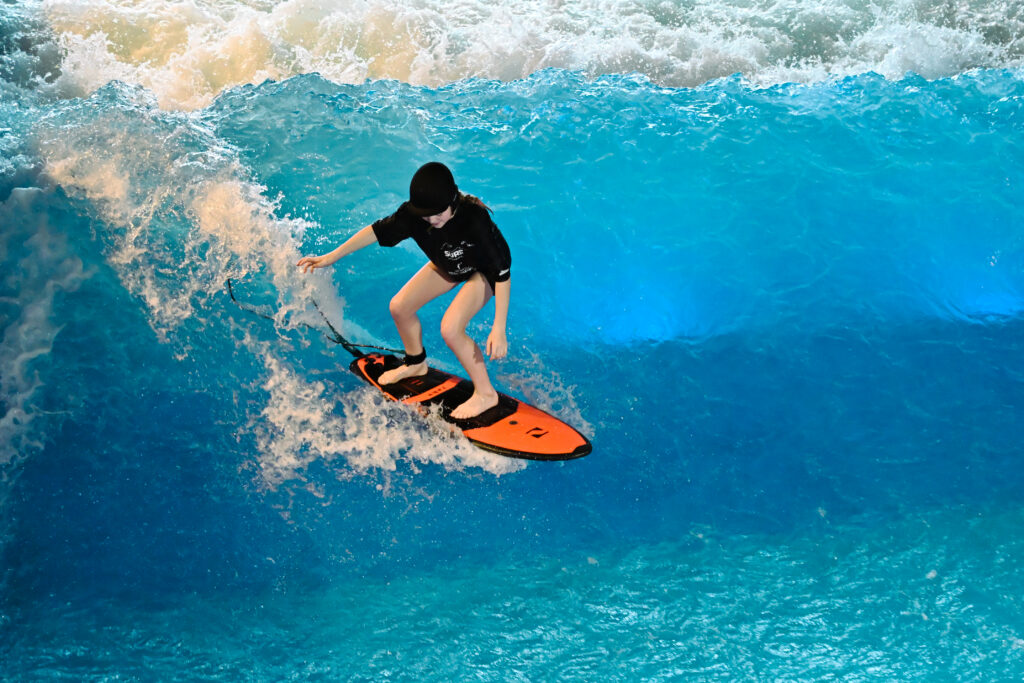
Engineered waves don’t check credentials, though. The same technology that trains the national team runs at surf parks open to anyone with a booking. A kid fresh off watching the Games can paddle into the kind of wave their Olympic idols train on and live a little of the dream.
When the national team trains on engineered waves, everyone downstream notices: coaches, clubs and parents of twelve-year-olds.
The Contest Calendar Moved Inland
Growth on this scale is how a sport grows up. Rules get written, judges get trained, and contests start showing up at every level. The pros got there first. The World Surf League brought its Championship Tour to a wave pool back in 2018, at Surf Ranch in Lemoore, California and has kept building its presence in the space ever since.
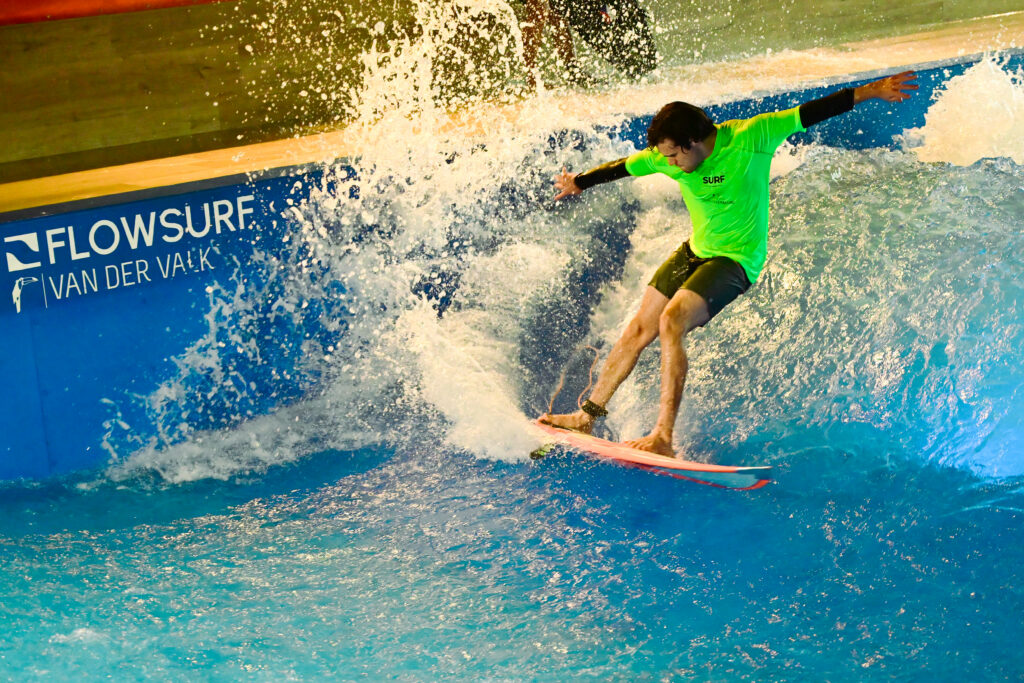
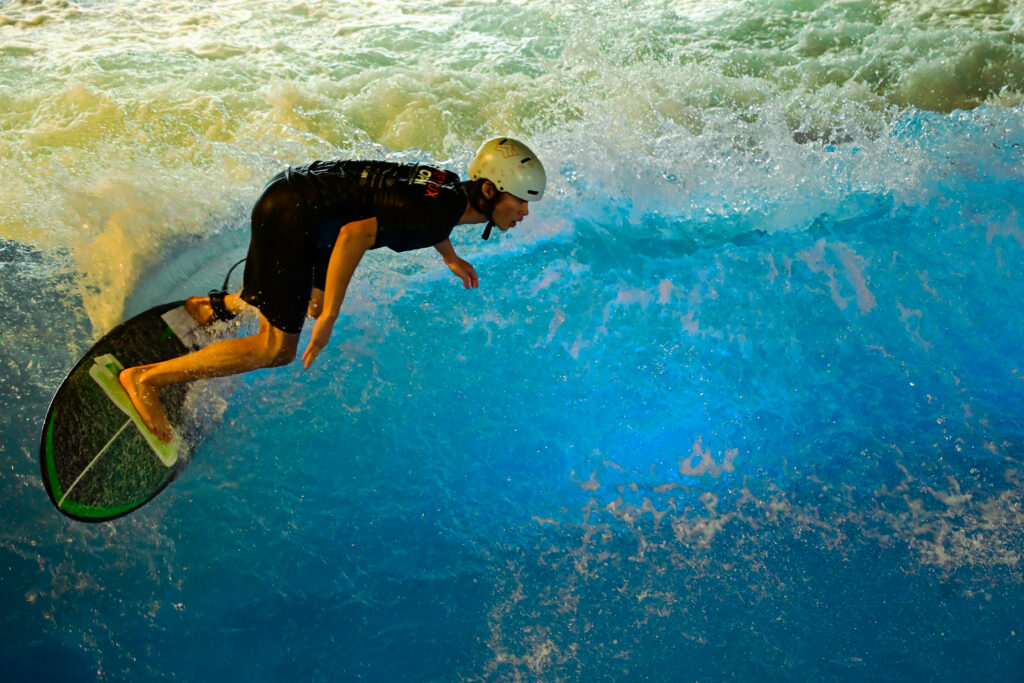
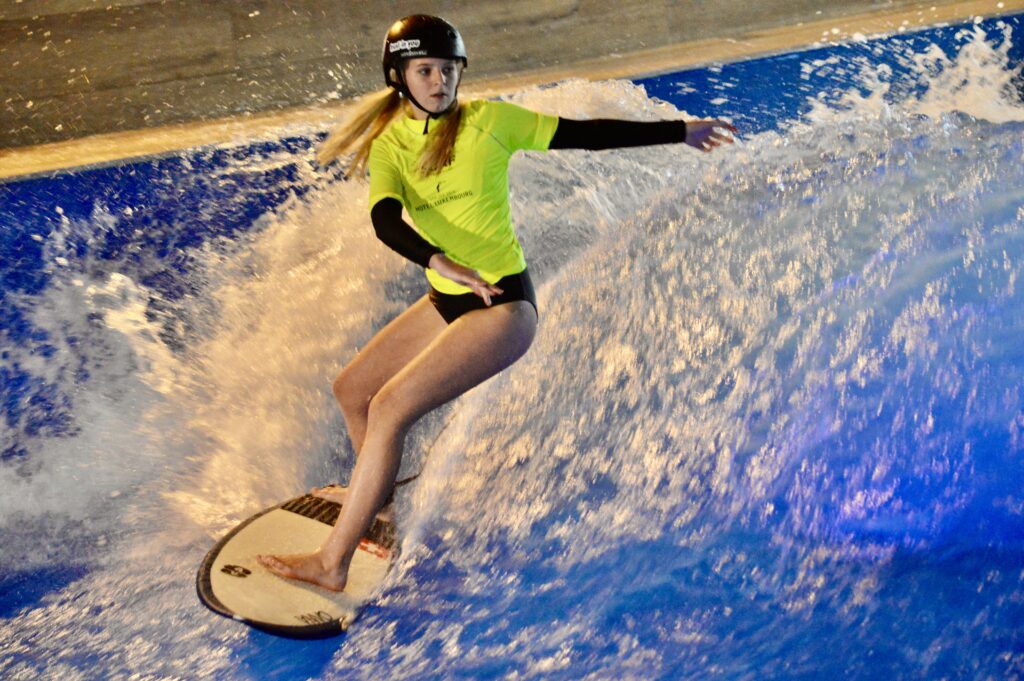
Stationary waves are building a circuit of their own. In Europe it goes by rapid surfing: the rider holds position on a standing wave while the water does the moving. Germany now runs its national rapid surf championships inside The Finals, a multi-sport streamed event. In September, near Lucerne, Europe crowned its first continental rapid surf champions.
Belgium Gets Its First Podium
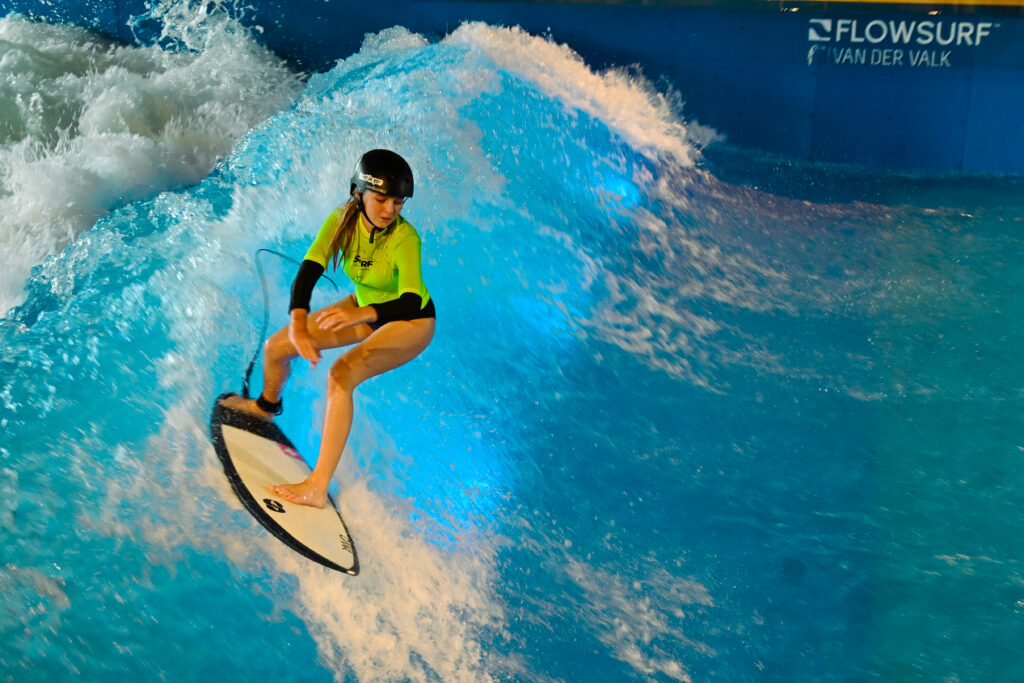
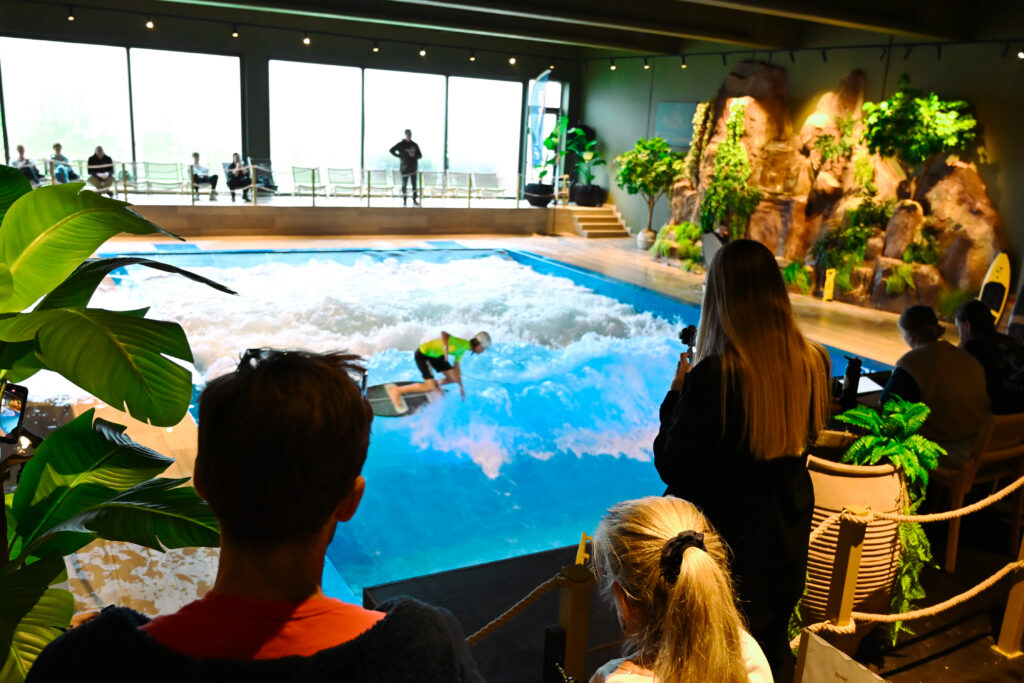
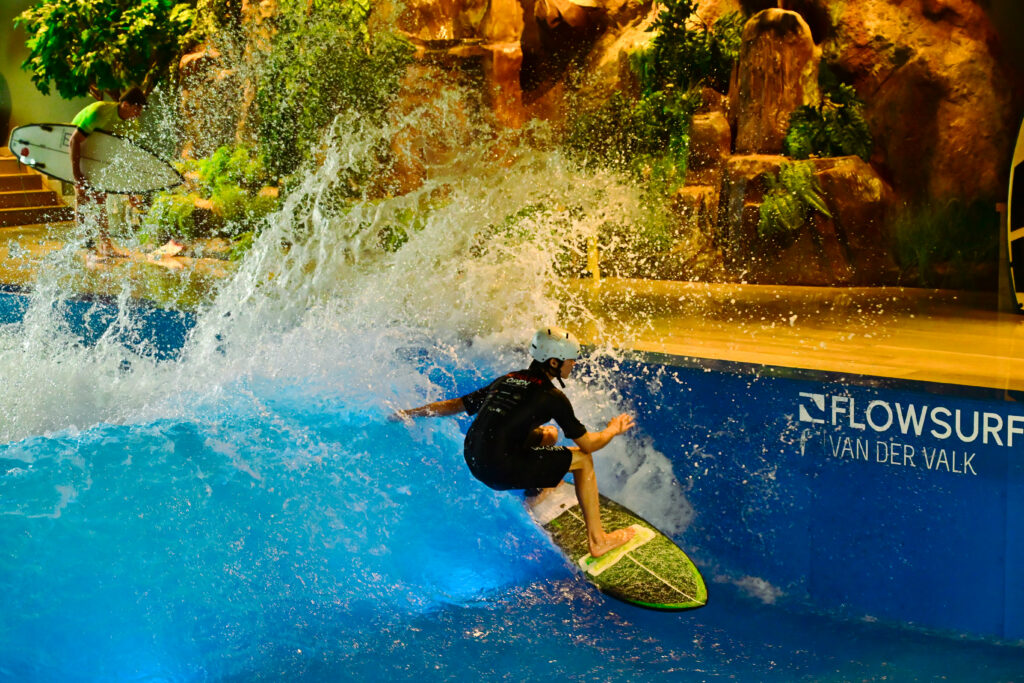
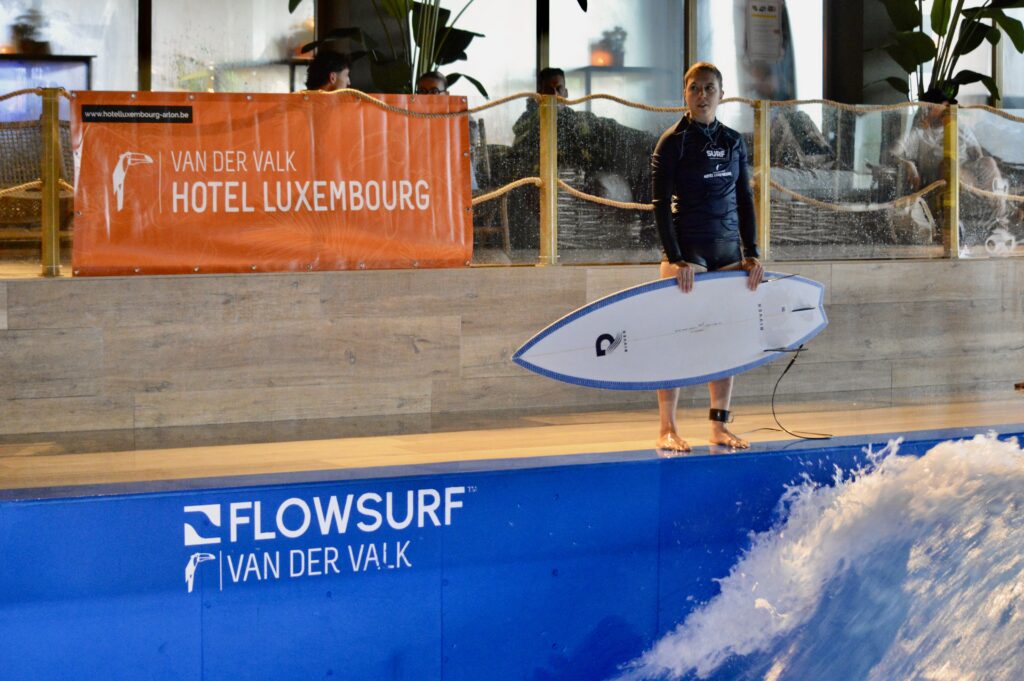
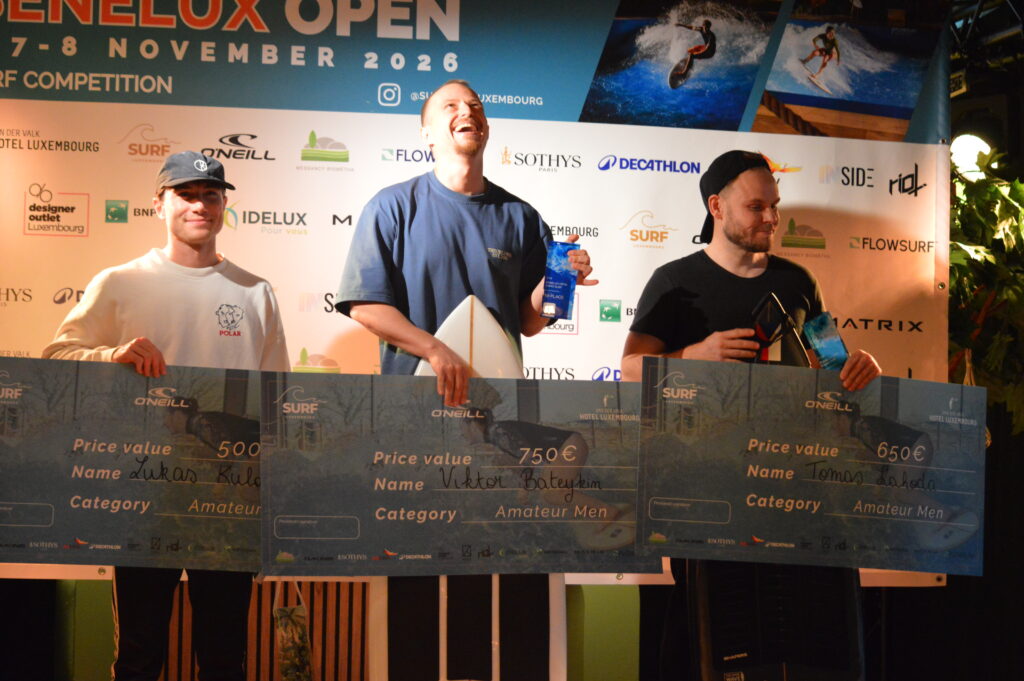
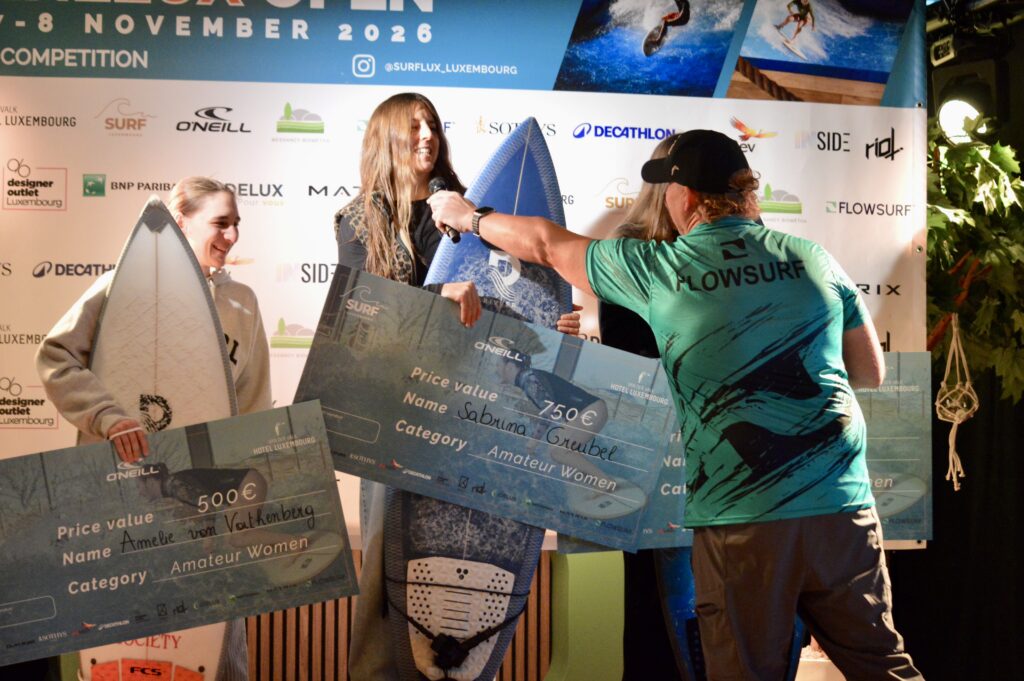
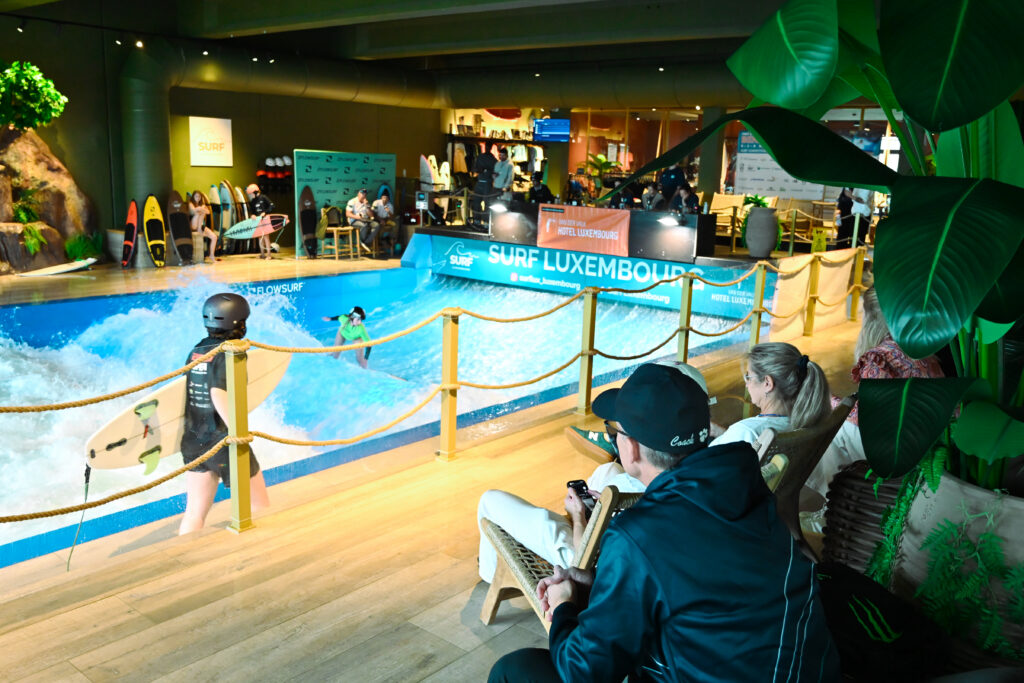
This month, FlowSurf joined the calendar. Surflux hosted the inaugural Benelux Rapid Surf Championship, the first competition ever held on a FlowSurf deep-water wave, less than a year after opening its doors beside the Van der Valk Hotel Luxembourg-Arlon.
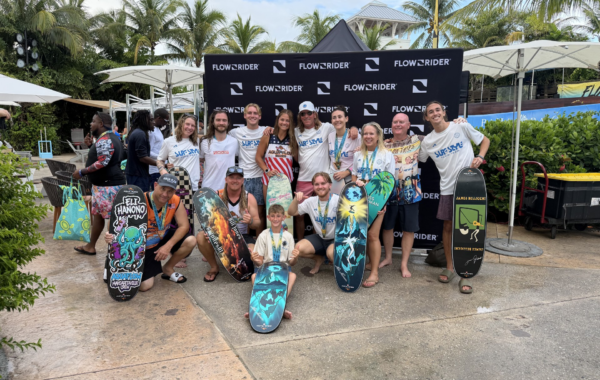
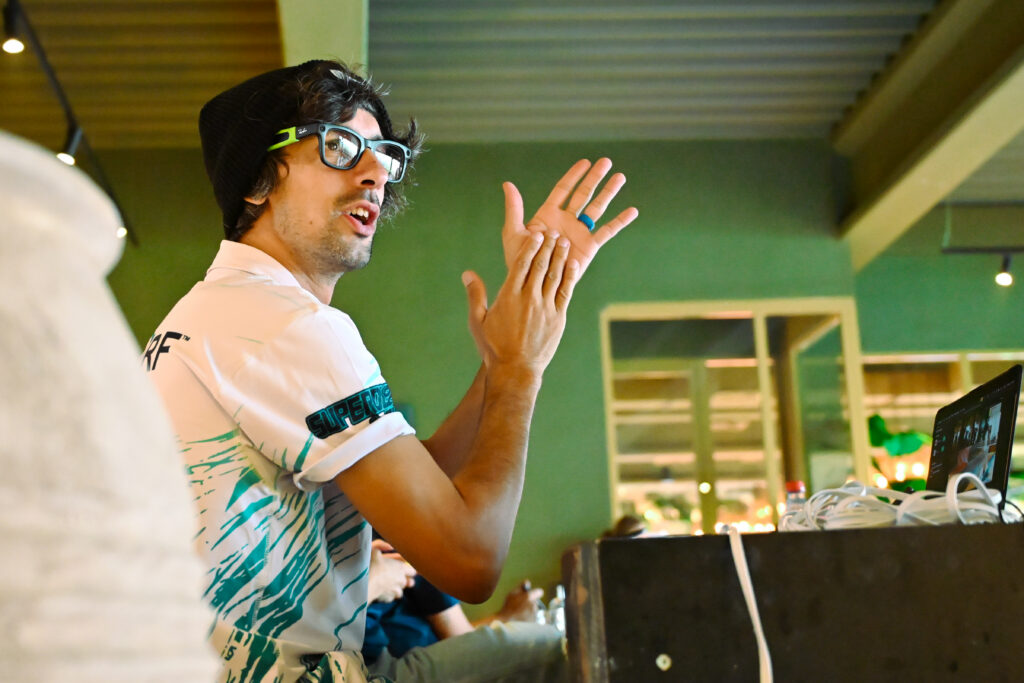
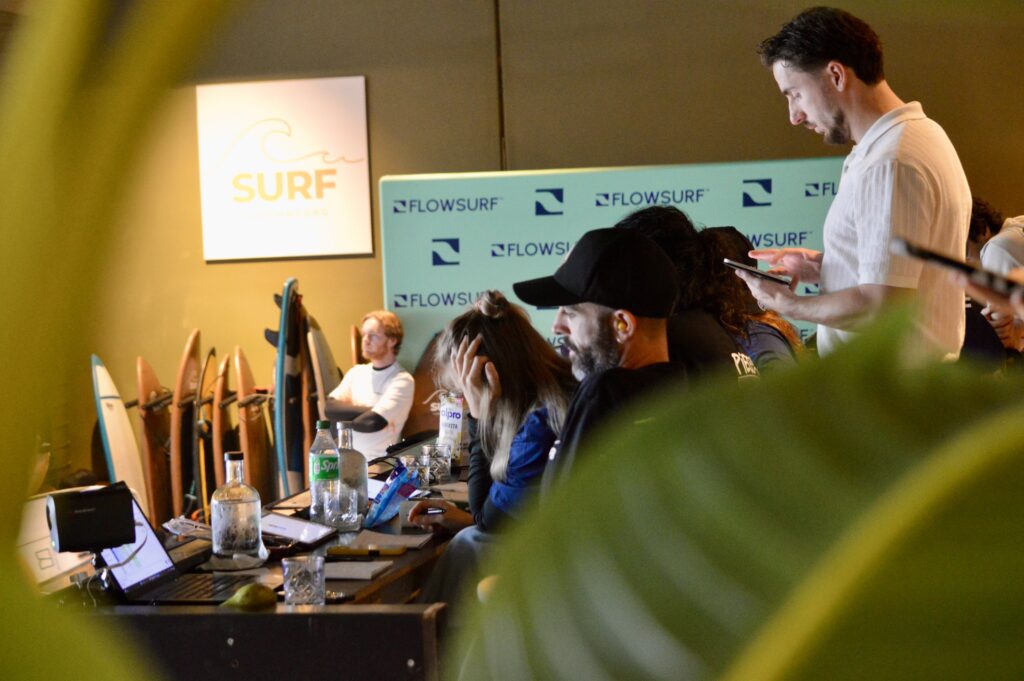
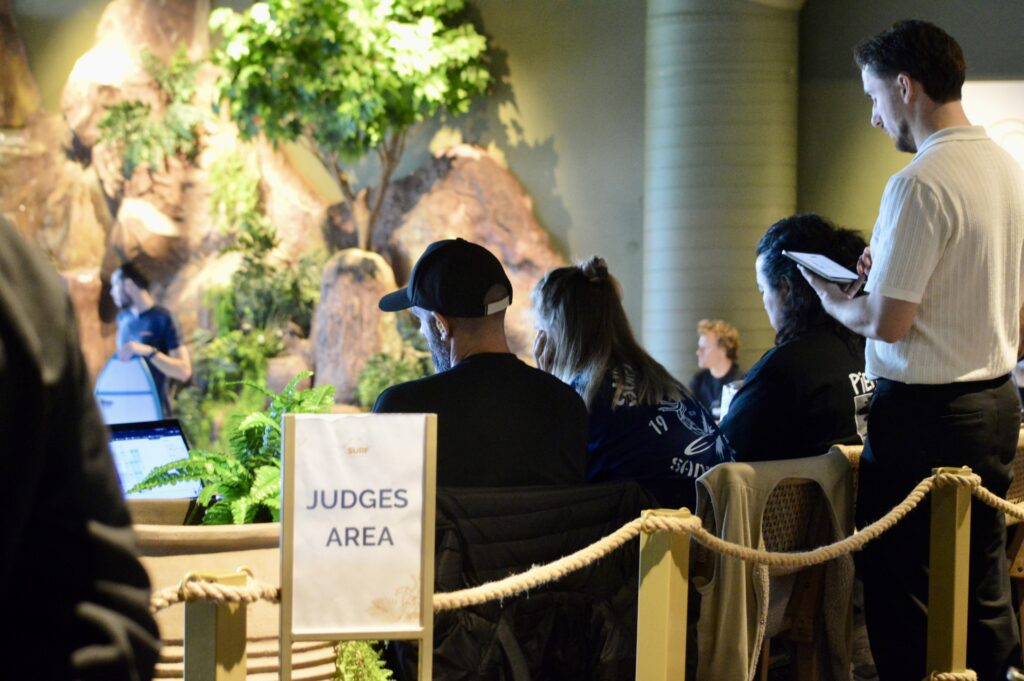
Fifty-four riders from 10 countries competed across Junior, Amateur, and Pro divisions. Some of Europe’s top rapid surfers lined up against a crew from the U.S., including a world wakesurfing champion, Sean Silveria, who took home best trick and a few top flowboarders who made the trek across the pond. Germany’s national surfing federation came on board to run the judging, giving a first-year event an international panel.
Friday was practice and seeding. Saturday brought the qualifying heats. Sunday was finals and podiums, with a surf village serving food and music between rounds.
Huge credit goes to Steven and Sandra Zeeuw van der Laan, the team behind Surflux. They believed in FlowSurf early, then put a championship on the calendar inside their first year. Along the way they built a venue that pairs surf with spa, opened it with a ceremony full of riding, and created a place where people who share the same obsession with a wave can find each other.
What a Weekend Is Worth
For a hotel or resort, an event weekend reaches well past the wave. Athletes, coaches, and families book multi-night stays, often in months that could use the help. Spectators stay on property for hours and eat between heats. Local brands want their name on the banner. And every ride ends up on someone’s feed, geotagged to the property.
Stationary waves happen to be built for an audience. The rider stays in one spot, so the crowd sits close. Heats run back to back with no waiting on swell. One intimate viewing deck covers the whole show.
Then comes the long tail. Riders training for next year’s contest turn into members, lesson regulars, and repeat guests. Plenty of inspired spectators hop on board too and join the growing community of riders.
Why Now
Surfing has the audience. It has the participation numbers. Now it has a contest calendar that runs from a Championship Tour stop at a wave pool to a first-year podium at a stationary wave in Arlon. A sport growing this fast needs somewhere to go and plenty of it would happily check in.
When the 2028 broadcast from Trestles ends, plenty of the people watching will go looking for a wave of their own. The properties that already have one will book the lessons, the training stays, and the event weekends that follow.
FlowSurf lets boutique hotels and resorts alike cash in on that growth. At Surflux and neighboring Van der Valk Hotel, a single compact wave turned a boutique property into a surf destination. Surf Luxembourg runs 365 days a year, sells surf-and-stay packages with the hotel, and now has a championship on its calendar. A resort can take the same idea to a bigger guest base. At either size, the same wave serves the first-timer and the pro.
Surfing used to ask a lot of its riders: the right swell, the right season, the right zip code. That list keeps getting shorter. For hotels, the opportunity is every guest who wants in, whether they’re chasing a podium or their very first stand-up.