Not long ago, surfing required three things: an ocean, a board, and the willingness to sometimes wake up before sunrise to chase a swell that may or may not show up. It was geographic. It was unpredictable. And for most of the world’s population, it was completely out of reach.
That’s no longer the case. And the implications for how we design, invest in, and experience the built environment are bigger than most people have stopped to consider.
A Sport Without Borders
Surf culture has always punched above its weight. The aesthetic, the lifestyle, the language, all of it spread far inland long before the waves did. Kids in landlocked cities have been buying surfboards and watching surf films for decades, drawn to something that felt like freedom even from a distance.
What’s new is that the wave itself has followed. Artificial surf technology has matured to the point where a world-class wave experience can be built almost anywhere: in the middle of Texas, indoors of a boutique hotel in Europe or an adventure hub in Saudi Arabia. The ocean is no longer a prerequisite.
BSR Cable Park in Waco, Texas turned a sprawling central Texas ranch into one of the most talked-about surf destinations in the world. ADRENA is positioning the Middle East as the region’s next frontier for wave-driven tourism. And Surflux is bringing year-round wave riding to landlocked Belgium. These aren’t niche operations for hardcore surfers. They are destinations, full stop, that happen to have a stationary deep-water wave at their center.
Why Wave Now
A few forces are converging at once, and it’s worth understanding each of them because together they explain why the inland surf market isn’t just a trend. It’s a structural shift.
The first is generational. Younger travelers and consumers are prioritizing experiences over goods at a rate we haven’t seen before. They’re not saving up for a car or a watch. They’re saving up for a trip, an event, a memory. Active experiences sit at the top of that list, and surf culture, with its blend of physical challenge, aesthetic cool, and community, hits every note.
The second is wellness. The global wellness economy is enormous and still growing. Surf, once seen purely as an extreme sport, has quietly repositioned itself as a wellness activity. The rhythm of it, the focus it requires, the time outdoors, it appeals to the same audience that fills yoga studios and cold plunge facilities. That’s not a coincidence. It’s a positioning opportunity that the best surf destinations are already capitalizing on.
The third is spending behavior. Luxury travelers aren’t cutting back, they’re being more selective about where the money goes. The shift is away from passive luxury and toward active, physical, story-worthy experiences. A wave, managed well, checks all three boxes.
A Culture that Travels
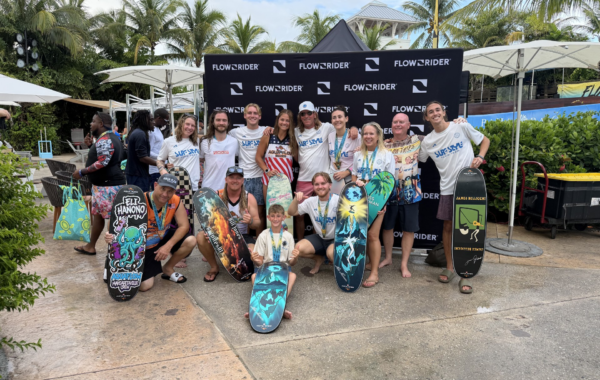
What makes surf different from other experience economy plays is that it comes pre-loaded with a global community. You don’t have to build the culture from scratch. It already exists, it’s already passionate, and it’s already looking for places to ride.
This is what Endless Surf, FlowRider’s sister brand under WhiteWater West, understood early. The inland surf movement isn’t just about building a water feature. It’s about tapping into a culture that has been waiting for exactly this kind of infrastructure. The riders will come. The question is whether the venues, the cities, and the developers are ready to meet them.
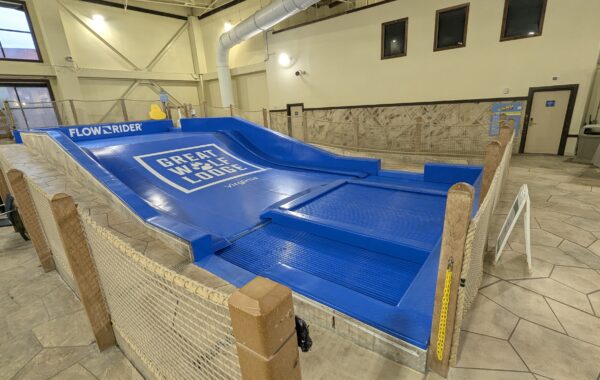
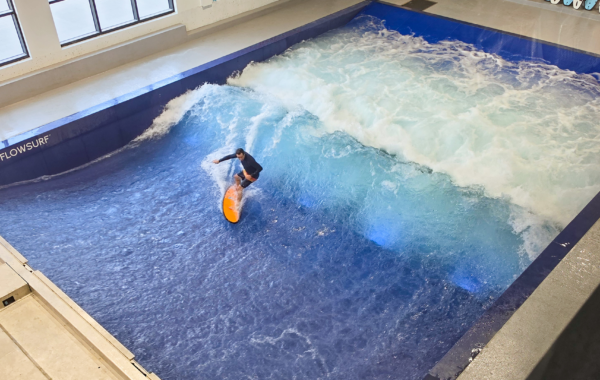
While traveling waves offer an almost exact replication of the ocean’s roll, products like FlowSurf, part of the FlowRider product line, offers a deep, continuous wave experience that speaks directly to surf culture while remaining accessible to guests who have never ridden before by offering 4 different wave heights to easily progress on. And what makes a product like FlowSurf even more attainable and attractive to those building for this moment, is the compact and efficient nature of the installation. Its size allows for boutique and massive in scale, while its energy and water consumption are half of its competitors.
What the Experience Economy is Asking For
There’s a phrase making the rounds in hospitality investment circles right now that holds weight here: future winners control the guest, not just the asset. What that means in practice is that the properties and destinations that win long term are the ones that create a reason to come back, a community to belong to, an experience worth repeating.
A wave does that in a way that a pool never could. Every session is different. The learning curve keeps people coming back. The community that builds around a wave is self-sustaining in a way that most amenities can only dream of. It generates content, drives word of mouth, and builds loyalty without a loyalty program.
The Early Innings
The inland surf market is still in its early innings. The number of world-class artificial wave destinations globally is still small enough to count. The operators who move now are staking a claim in something that will look very different, and very much larger, in ten years.
The ocean took millions of years to get where it is. The wave is just getting started.