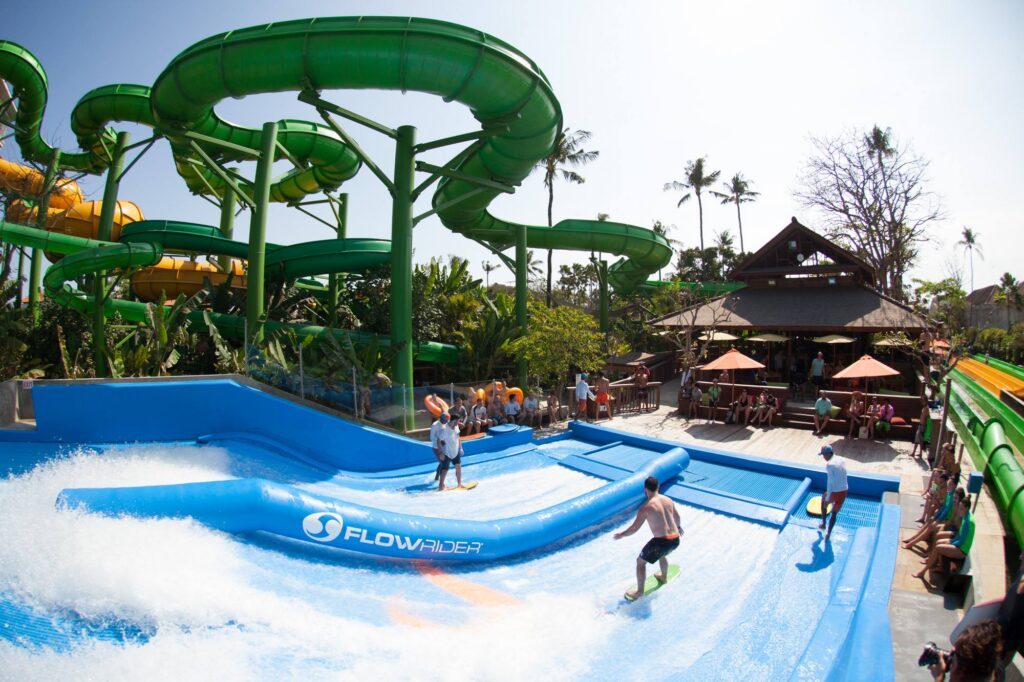
Bali doesn’t need a wave machine. The island has real ones.
And yet, in 2013, Waterbom Bali added a FlowRider Double to a park that had been running since 1993 on a philosophy of quality over quantity. Fewer attractions, better executed. No filler, no chasing volume. Every addition had to earn its place.
The FlowRider earned it.
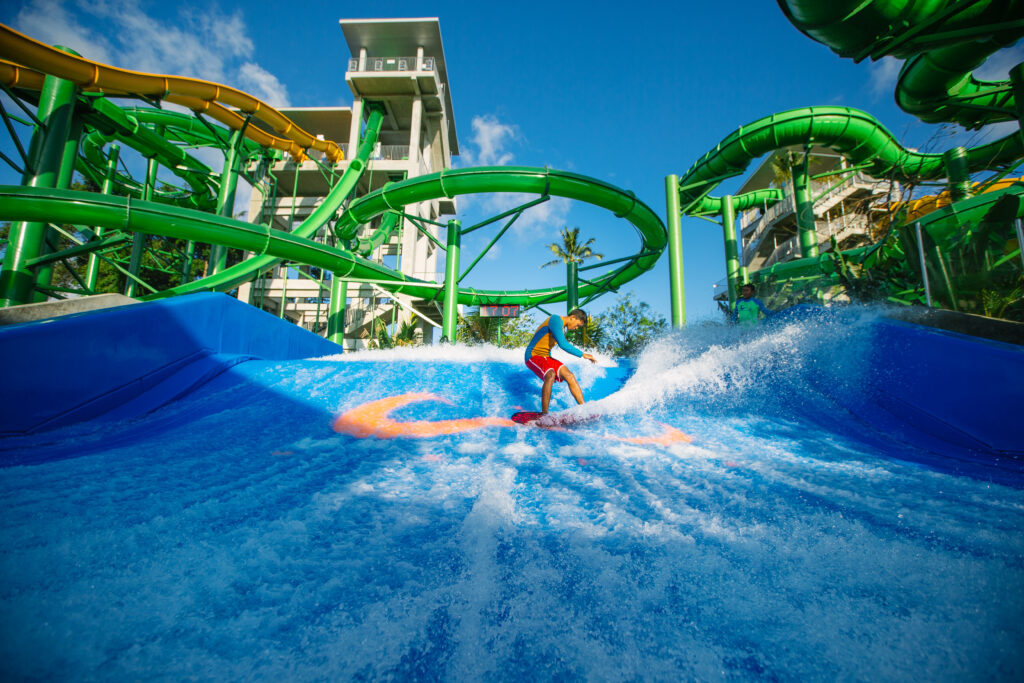
Not because it competes with the breaks at Uluwatu or Padang Padang. It doesn’t try to. What it does is serve the same instinct that draws people to those waves in the first place: the desire to be challenged, to try something physical and unfamiliar, to walk away having actually done something. Surfers come. Skaters come. Snowboarders come. First-timers who’ve always been curious about board sports but never had the entry point come, too. The wave is controlled, the instructors are there, and the ocean is not required.
Bali already has the surf culture. The FlowRider just gives it somewhere else to go.
The Wave That Earns Its Keep
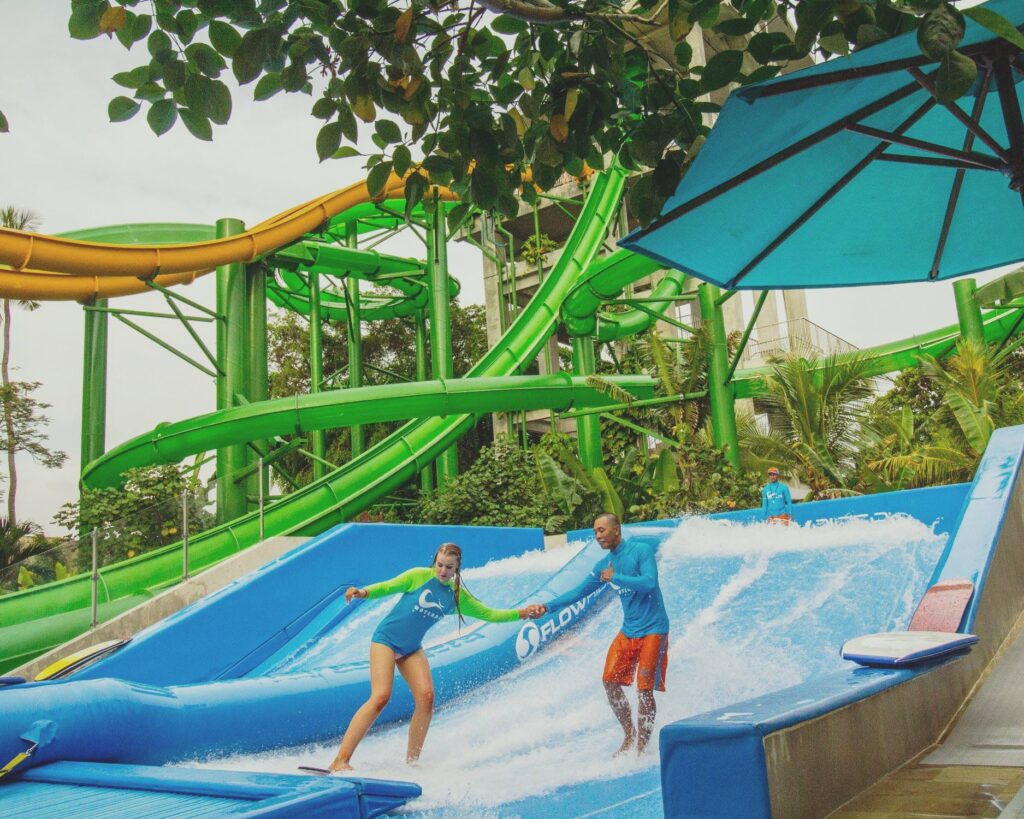
The FlowRider at Waterbom is a paid add-on within an already premium-priced park, the only attraction not included in the standard day pass. That’s a deliberate choice, and it’s worked. Guests recognize the value of dedicated instructor time, one-on-one coaching in a safe and controlled environment, and an experience that genuinely requires something from them. The pricing signals seriousness. It filters for guests who show up ready to engage.
And those guests come back.
Waterbom sees it in their reviews, where FlowRider consistently shows up as a highlight of the visit: fun, challenging, rewarding once you get the hang of it.
The most common feedback is wait time during peak season, which is its own kind of endorsement.
They see it in the regulars, guests who return specifically to ride, some who spend an entire day on the wave. Waterbom sees it in the kids most clearly. A nervous first-timer coached through it by an instructor, then back at the front of the line on their next visit without anyone asking twice. That’s not a novelty. That’s a habit.
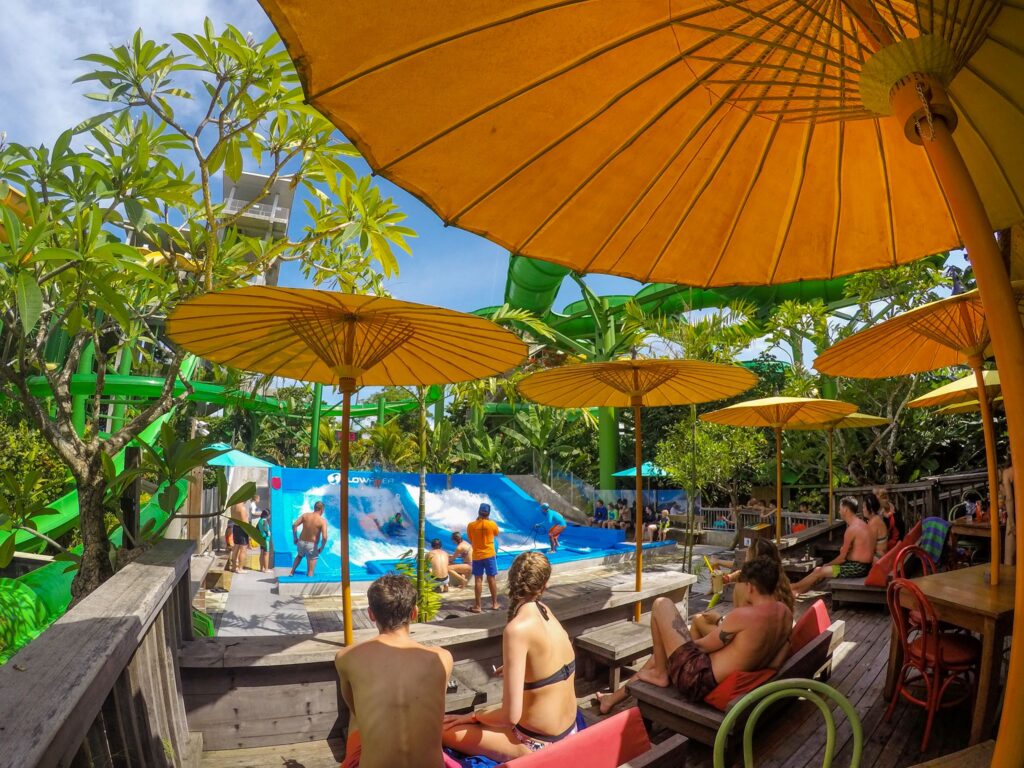
More Than a Machine, It’s the Main Stage
The most telling thing about how Waterbom thinks about the FlowRider isn’t the wave itself. It’s what they built around it.
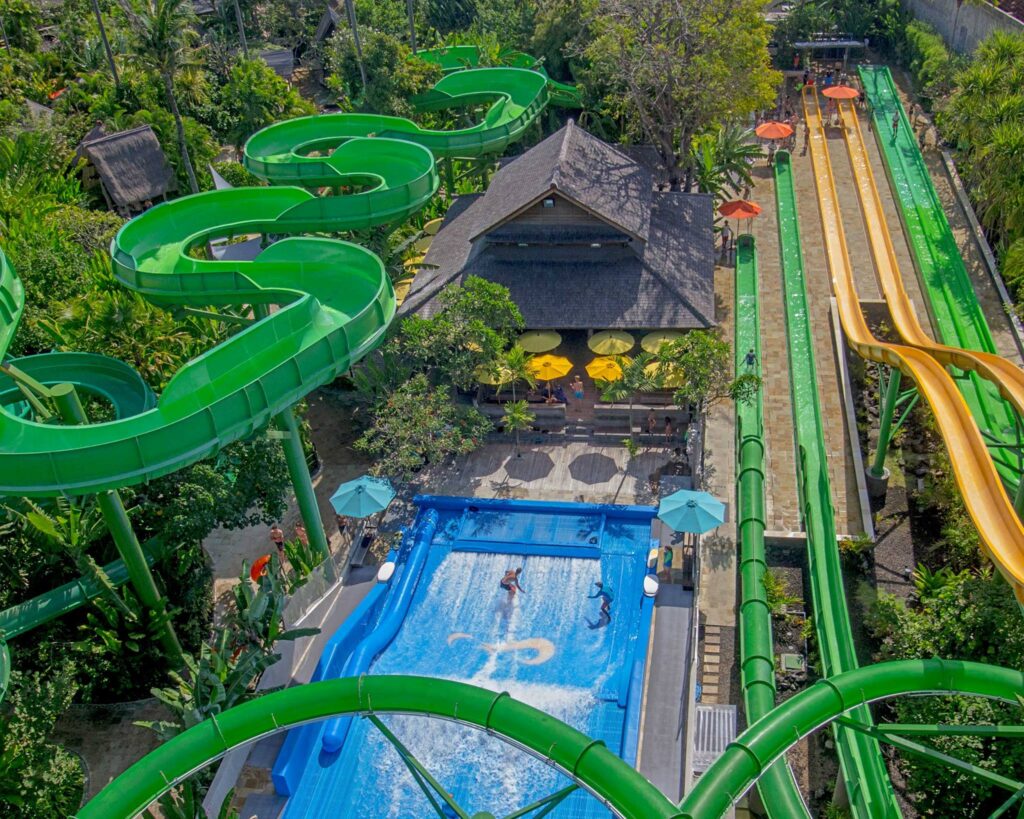
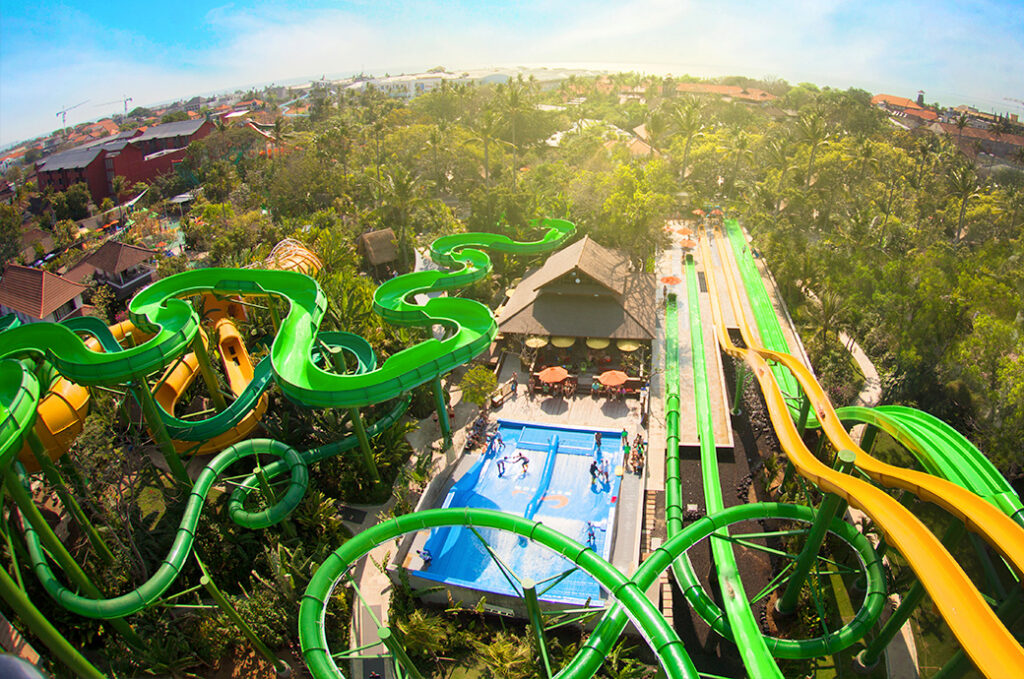
FlowShow Fridays started as a platform for the instructors. These are people who spend hours developing real skill on the wave, and the park wanted guests to see what that actually looks like. So they perform. Trick shows, crowd energy, characters who genuinely love what they do. The event is tied directly into food and beverage promotions at Sliders, the restaurant positioned right next to the attraction, and the entire area transforms into something closer to a social hub than a waterpark queue.
The result: longer dwell times, more food and beverage spend, an entertainment moment that serves riders and non-riders equally.
Guests film it. They share it. The FlowRider generates social content and word-of-mouth visibility well beyond the people who actually get on the wave.
It’s worth noting that the attraction runs on a closed-loop filtration system, water continuously recirculated and treated rather than replaced, and Waterbom reached 100% renewable energy dependency in 2025. The sustainability question is one they take seriously and answer at the park level, not just the attraction level.
Sayan Gulino, CEO of Waterbom Bali, puts the operator case simply: the FlowRider captures a niche market within the park. It attracts guests seeking a more active, skill-based experience. It encourages repeat rides. It creates an engaging spectator environment. And beyond the revenue it generates directly, it adds diversity to the attraction mix and strengthens the overall guest experience.
For a park built on the belief that fewer, better experiences beat volume every time, that’s exactly what a great addition looks like.