How a deliberate bet on FlowRider helped turn a municipal water park into the economic engine of an entire entertainment district.
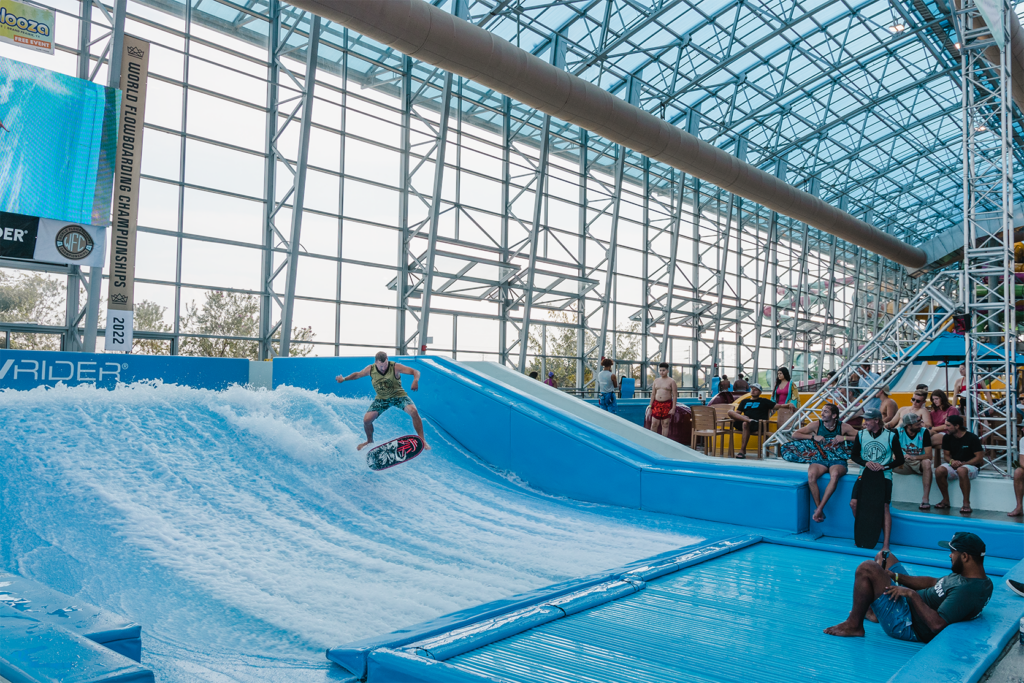
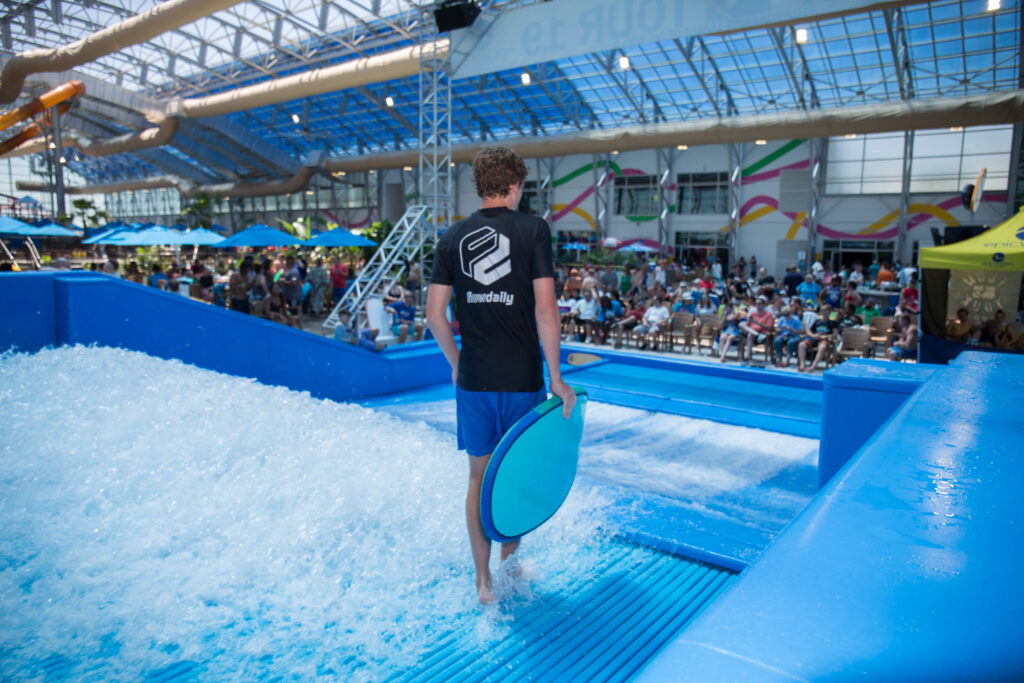
The first time Justin Brown really understood the value of a FlowRider, he was two weeks into his job at American Resort Management. He was doing a walkthrough of Epic Waters with ARM’s founder, looking down from one of the second-floor party rooms at the wave below.
There was a man on it with white hair past his shoulders, making it look easy. Brown figured he couldn’t be a day under 80.
“The story with him,” Brown says, “is that he has an annual pass. He’s a diehard. It’s exercise, it’s entertainment, it’s social interaction for him. He comes to the park virtually every day to be on the FlowRider.”
That moment changed the way Brown understood the product. Not a ride. Not an amenity. Something people build their lives around. And at Epic Waters, it turned out to be something an entire park was built around too.
The Question That Started Everything
Grand Prairie, Texas sits in the heart of the Dallas-Fort Worth Metroplex, a metro of nine million people. For years, city leaders watched other municipalities build world-class attractions and kept coming back to the same question: why can’t we do that here?
The city ran the feasibility analysis. They looked at sales tax incentives and municipal bond options. They studied what made great parks great. And when the numbers penciled out, Grand Prairie committed to a destination water park that would serve its residents, pull visitors from across DFW, and anchor a bigger vision for the land around it.
From the beginning, FlowRider was central to that vision. City representatives toured existing installations around the country, including the Pump House at Jay Peak Resort, to understand what a FlowRider-anchored park could look like in practice. What they found wasn’t just a ride. It was a spectator sport. A social scene. Something guests could struggle through in the morning and leave having genuinely improved by the afternoon. That combination, accessible to anyone, compelling enough to keep people coming back, was unlike anything else on a water park floor. It became the anchor around which everything else was designed.
Epic Waters Indoor Waterpark opened in 2018. It has outperformed every projection in its original feasibility study. The FlowRider Double draws more than 40,000 riders annually and the broader Epic Central campus, which has grown to include restaurants, an entertainment venue, and Illuvia, a Vegas-style water and light show, recorded more than two million visits in 2024.
The commercial development that followed tells its own story. Over one million square feet of retail space came to the area after Epic Waters broke ground. IKEA, Bass Pro Shop, Main Event, businesses that don’t follow struggling destinations. The park served the existing community while helping to build an entirely new one around it.
“It’s a testament to what a water park can do in a municipal setting, to be a true catalyst for economic development,” says Justin Brown, Executive VP of Development at American Resort Management, which has operated Epic Waters since opening.

Built Around the Wave
“The first question that always gets asked when we lay out new water parks isn’t where the kitchen goes,” says Brown. “It’s where the FlowRider is going to go.”
At Epic Waters, the answer was deliberate: front and center, just past the entrance, adjacent to the bar. Visible the moment guests walk through the door. And designed not just for maximum exposure during park hours, but for flexibility outside of them. The placement allows the FlowRider zone to operate independently of the rest of the park, making private rentals, corporate events, and after-hours bookings easy to run without staffing the full facility. That single design decision has driven significant ancillary revenue ever since.
When groups come to rent, the FlowRider is almost always what they’re coming for. Whether a group can’t afford to rent the whole park or just wants to focus on one thing, Brown says, that one thing is always FlowRider. Board and Brews, a recurring event series built around the wave, pairs local craft beer and live music with open FlowRider access, a format that reliably brings in guests who wouldn’t otherwise visit and keeps them spending.
The guest experience tells the same story. Reviews consistently cite the FlowRider as a highlight of the day. Parents write in about flow instructors who are patient, who teach new skills, who help kids conquer a fear they didn’t know they had. It’s a one-on-one interaction that doesn’t exist many other places in the park and it’s a reason people come back.
And then there are the regulars. The people who come not for a day out but because the wave has become part of their routine. Jack, the 80-year-old with the annual pass, is one of them. Behind him, Brown says, are twenty more just like him.
“It’s more than an attraction. It’s social interaction. It’s good exercise. It’s something that people from all ages from 8 to 80 can truly experience.”
The Wave That Became a Festival
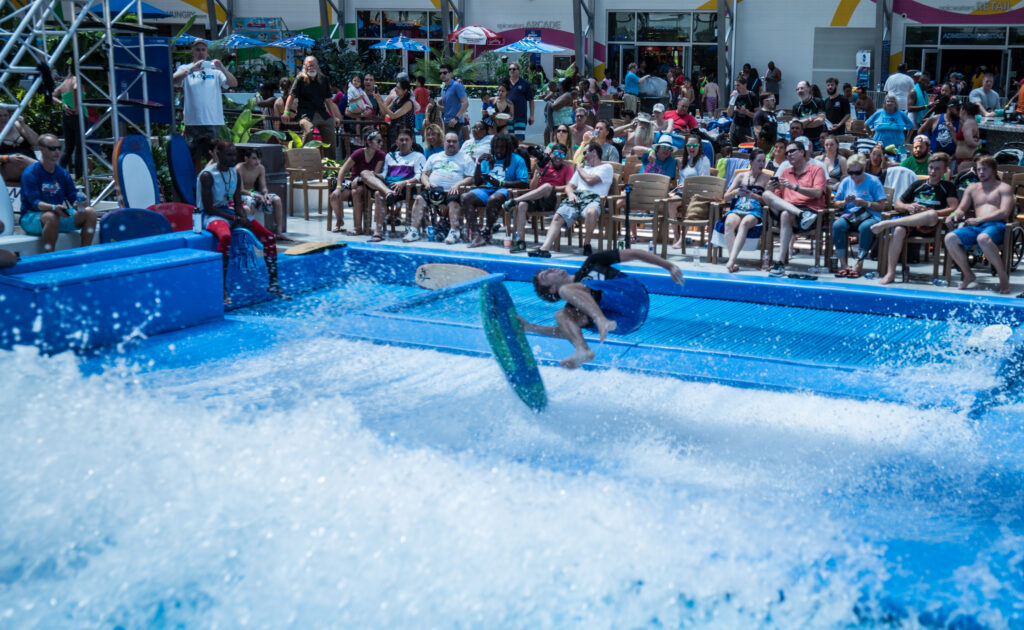
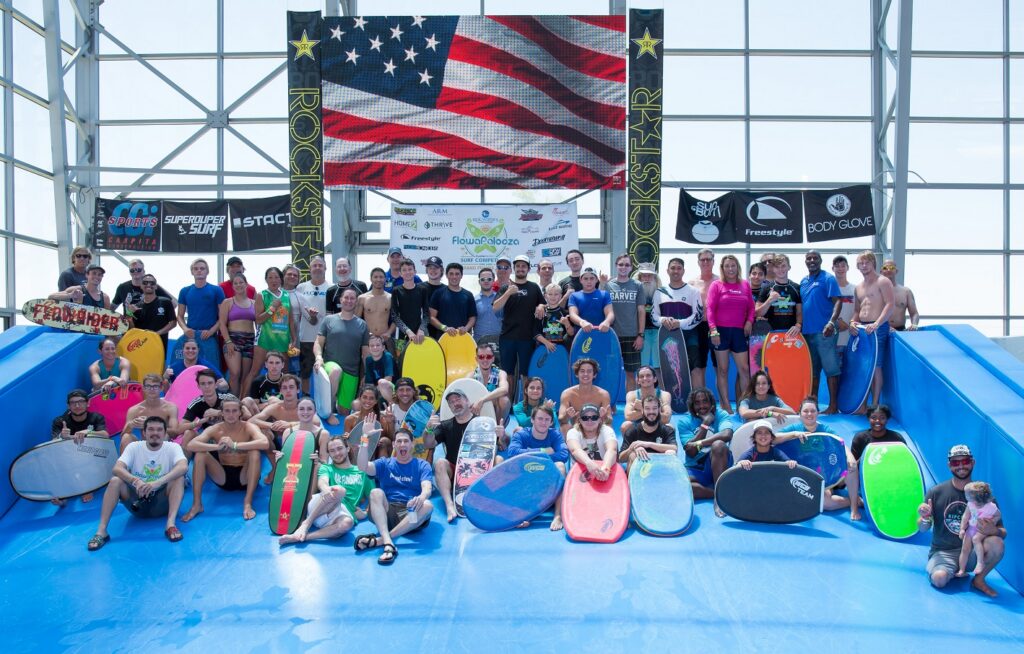
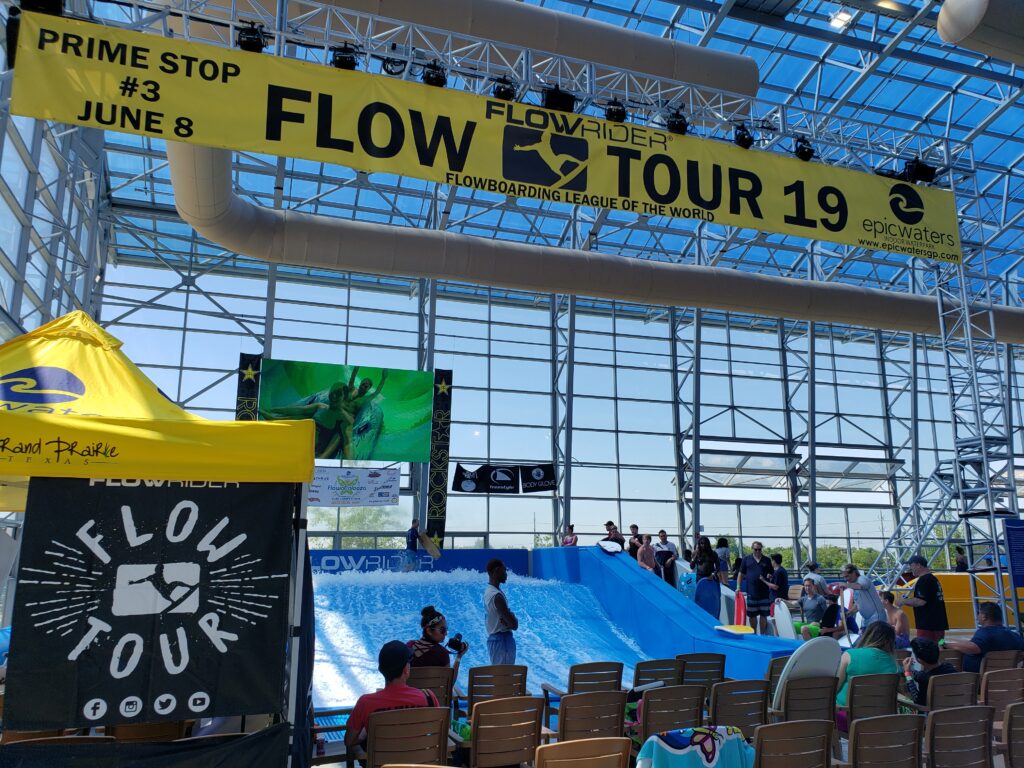
FlowPalooza began as a FlowTour competition stop at Epic Waters. What it has grown into says everything about what a FlowRider installation can do to a community over time.
The event now draws 6,000 to 7,000 people to the Epic Central campus. It spans the Grand Lawn outside the water park, with live music, circus acts, food vendors, and local businesses set up across the grounds. The wave created a community passionate enough to build a festival around it and that festival has become a summer fixture for Grand Prairie families.
“It used to be a bigger competition with a little bash around it,” says Brown. “Now it’s totally been flipped. It’s a small competition with a big bash and that’s exactly what it should be.”
What the growth of FlowPalooza proves is that a FlowRider installation isn’t a static amenity. It’s a platform. The competition gave people a reason to show up. The community that formed around the wave gave them a reason to stay, come back, and bring everyone they know.
The Phone Call That Matters
For ARM, the relationship with FlowRider has been as important as the product itself. Safety is non-negotiable in the attractions industry and Brown consistently notes that FlowRider shows up on that front, from chairing committees on ASTM standards development to on-site training sessions where flow instructors get hands-on time with the manufacturer’s own team.
“That connection, to actually be taught by the manufacturer, is special. Not a lot of folks have the opportunity to do that.”
The durability story matters too, especially for municipal operators making decisions that have to hold up to a city council and a long-term budget. After eight years and 400,000-plus annual riders, the FlowRider Double at Epic Waters recently completed its first full refurbishment, ride surface, padding, mechanical overhaul. It looks brand new. Brown expects to do it again in another eight or nine years. For a municipality weighing a major capital investment, that kind of predictable maintenance cycle is exactly what the feasibility study needs to reflect.
But what Brown comes back to most is simpler than any of that.
“Inevitably, something comes up on July 4th weekend. And you want to have that lifeline. You want to know that when you pick up the phone, someone is going to answer.”
Eight years in, someone at FlowRider always has.
What Other Cities Come to See
Epic Waters has become a destination that other operators and city officials visit when they’re deciding whether to build. Bellevue, Bradley, Pecos, Greeley, municipalities from across the country have tour the park, watch the wave, and walk away saying the same thing.
“They all say, I want that. I want that attraction.”
For ARM, that validation has done more than generate goodwill. It has shaped a replicable model. The same logic that made Epic Waters work, a FlowRider at the center of the design, flexible programming built around the wave, a community that grows over time, is the model ARM brings to every new project. Epic Waters is the proof of concept. And the pipeline, Brown says, is strong.
Asked what he’d tell an operator sitting on the fence, Brown doesn’t reach for a sales pitch.
“When you start to peel back the onion, you realize there’s so much more than just listing FlowRider as an attraction on your website. Folks are going to build community around it. It’s going to drive ancillary revenue. It’s going to give your guests an experience where they can truly get better.”
“On every project and every client we have, we always ask ourselves: is what we’re doing epic enough? When we look at the guest experience our visitors have on FlowRider, we can say, in all sincerity, yeah. It is.”